Is Blackjack Poker? Key Differences Between Blackjack and Poker Explained
If you’ve ever wandered through a casino or browsed online games, you’ve probably noticed blackjack and poker appearing everywhere. They both use standard playing cards, but beyond that they differ in rules, objectives and the way the table works.
This post gives a clear, fuss-free comparison so you can see how the games really differ and decide which might suit you. It’s an informational piece, not a how-to for winning.
Curious what sets them apart? Let’s dive in.
Blackjack Basics: How Is It Played?
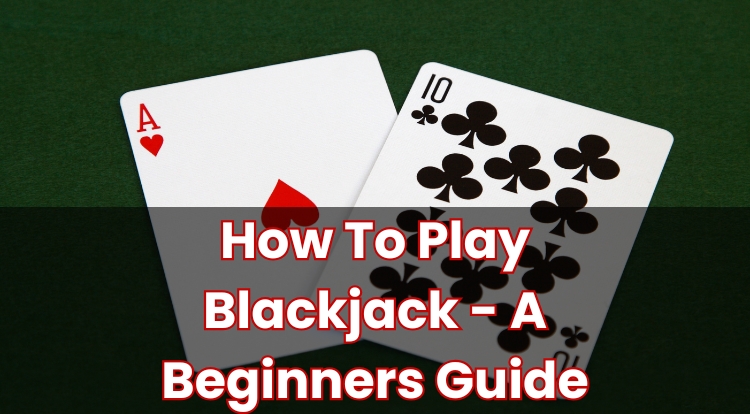
Blackjack centres on a simple objective: have a hand value closer to 21 than the dealer without exceeding 21. Each player receives two cards and so does the dealer, often with one of the dealer’s cards face-down. Numbered cards count at face value, Jacks, Queens and Kings count as 10, and Aces can count as 1 or 11, whichever benefits the hand.
Players decide whether to “hit” to take another card or “stand” to keep their total. There are also options such as doubling down or splitting in certain situations, which change how a hand is played and how much is wagered on it. The dealer follows fixed rules for drawing cards, so once players have taken their decisions the dealer completes their hand and the round is settled.
Because each player is up against the dealer rather than each other, the flow is straightforward and rounds move quickly. Learning the basic rules and common variations removes confusion and makes the game easier to follow.
Poker Basics: What Makes It Different?
Poker is a contest between players. The goal is to have the strongest hand at showdown or to use betting to cause others to fold. Players are dealt cards, and several rounds of betting give room for strategy: matching a bet (call), increasing it (raise) or leaving the hand (fold).
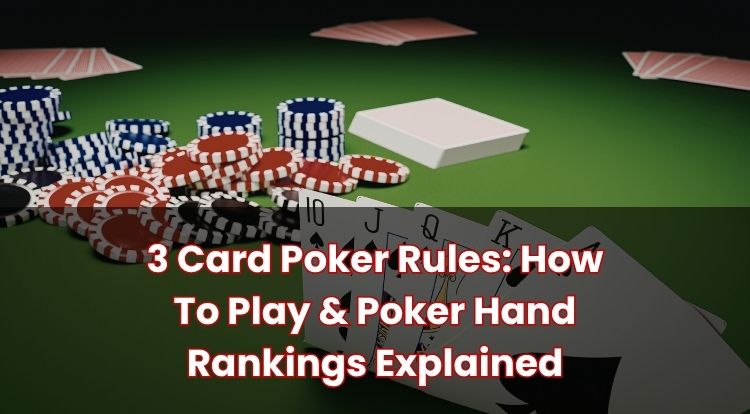
Hand rankings—pair, two pair, straight, flush, full house, and so on up to a royal flush—determine who wins if more than one player remains after betting ends. But poker isn’t just about the cards: how you bet, when you show strength or weakness, and how you read opponents all shape the outcome.
There are many variants of poker—Texas Hold’em, Omaha, Seven-Card Stud—each with different dealing patterns and betting structures, yet all share the core mix of card combinations and player interaction.
Number of Players: Is Blackjack a Multiplayer Game Like Poker?
Both games can be played with multiple people at a table, but the nature of that interaction is different.
In blackjack, several players can sit at a table and play simultaneously, yet each hand is resolved independently against the dealer. What happens on one spot does not alter another player’s result, so decisions are made with the dealer’s upcard and your own cards in mind rather than reacting to opponents’ betting patterns. Players often focus on their own routine of hits, stands, doubles and splits, maintaining a steady pace across hands.
Poker, by contrast, is inherently social and competitive. Your opponents’ actions directly affect your choices and the eventual outcome, because you are competing for the same pot. Betting, bluffing and reading other players are central skills, and the flow of the game changes with every call, raise or fold.
This contrast changes the atmosphere. Blackjack tends to feel more individual and rhythm-driven, while poker is:
- conversational, with players exchanging banter and information,
- tactical, with moves designed to influence opponents and control the pot,
- reactive, because each decision depends on others’ behaviour.
These differences influence how people experience the table, the length of sessions and the types of skills that are rewarded.
How Do the Rules Differ Between Blackjack and Poker?
The rules in blackjack are largely standardised: each player receives two cards and follows a limited set of options (hit, stand, double, split). The dealer’s behaviour is governed by fixed, public rules. These constraints make the game consistent from round to round.
Poker’s rules focus on betting rounds, position, blinds or antes, and the particular way cards are dealt in the chosen variant. Rules vary much more between versions, and much of the game’s depth comes from decisions over multiple betting rounds rather than a fixed play order.
Together, these differences dictate very different skill sets: blackjack rewards decision-making within strict boundaries, while poker rewards long-term strategy, reading opponents and adapting to evolving dynamics.
What Are the Main Objectives of Each Game?
In blackjack the objective is narrowly defined: end the round with a hand value closer to 21 than the dealer without going over. The comparison is always against the dealer’s hand.
In poker the objective is broader and more flexible: either hold the highest-ranking hand at showdown or win by making others fold through betting. Because of the betting element and multiple rounds, poker involves bluffing, hand-reading and psychological play as much as the cards themselves.
These different goals create distinct experiences: blackjack presents a short-term, score-based challenge; poker unfolds over many hands with strategic investment in position and reads.
How Are Winners Determined in Blackjack and Poker?
Blackjack outcomes are decided immediately at the end of each round by comparing your total to the dealer’s. If your total exceeds 21 you lose that hand automatically. If the dealer goes over 21, any player who has stayed at 21 or below wins.
There are a few common outcomes in blackjack that affect whether you win, lose or push:
- A natural 21 (an ace and a ten-value card) on the first two cards usually beats other 21s and often pays at a higher rate.
- A tied total between player and dealer is called a push, where the player’s stake is returned.
- Standard wins occur when your total is closer to 21 than the dealer’s without going over.
In poker, winners are determined differently. A hand can be won either by having the best five-card combination at showdown after the final betting round or by being the last player remaining after all others have folded. Betting, position and the ability to read opponents therefore play as much a part in winning as the cards themselves.
Key differences between the games can be summarised as:
- Blackjack is basically a head-to-house comparison where each player’s hand is compared only to the dealer’s hand.
- Poker resolves contests through a combination of formal hand rankings and strategic betting that can remove opponents from contention before cards are revealed.
Are Card Values Handled Differently?
Yes. In blackjack, cards have fixed numeric values used to build a total towards 21. The values are:
- Numeric cards are worth their face value.
- Face cards (Jack, Queen, King) are worth 10.
- Aces can count as either 1 or 11, whichever helps the hand most without busting.
The game is centred on the sum of card values and managing that total against the dealer, with decisions driven by whether a hit or stand will improve the chance of staying at or below 21.
In poker, by contrast, the significance of a card depends on how it combines with others to make ranked hands. Suits rarely change the rank of a hand, except when they are needed to complete a flush, and they are sometimes used only to break ties in specific games.
An Ace in poker can be high or low depending on the combination, for example in a straight. Poker evaluates patterns such as:
- Pairs, two pairs and sets.
- Straights, which are sequences of ranks.
- Flushes, where all cards share the same suit.
- Higher ranked hands like full houses, four of a kind and straight flushes.
Overall, blackjack is about reaching a numeric target with fixed card values, while poker is about forming relative patterns and combinations from the cards you and others hold.
Do Blackjack and Poker Have the Same Betting Structures?
Their betting structures are quite different. In blackjack, wagers are usually placed before the cards are dealt, and the basic stake remains for the hand unless you choose an optional single-round decision such as doubling down or splitting pairs. Players may also be offered side options like insurance or surrender in some games, which affect the stake or outcome for that hand. Table limits are typically clearly stated, so the maximum and minimum bets are known in advance.
Poker involves multiple betting rounds where stakes can change through calls, raises and re-raises. The pot grows across those rounds and strategic betting is a central tool for influencing opponents’ decisions. Poker games also differ by their betting rules, for example:
- Fixed-limit, where bet sizes are set and cannot be changed beyond the prescribed amounts.
- Pot-limit, where the maximum raise is limited to the current size of the pot.
- No-limit, where a player can bet any amount up to their entire stack at any time.
Because poker betting occurs repeatedly and players can alter the amount at each stage, the framework creates a much wider range of tactical choices than in blackjack. In blackjack the decisions are largely about optimising a single hand against the dealer, while in poker the evolving pot and multiple players make bluffing, position and long-term strategy much more significant.
Is Skill or Chance More Important in Blackjack vs Poker?
Both games involve random card distribution, but the role of player skill differs in important ways. Blackjack offers relatively limited opportunities for long-term strategy because most decisions are constrained by the rules and the fixed objective of beating the dealer. Choices such as when to take another card, when to stand, when to double down or when to split pairs can affect expected outcomes over many hands, yet the house edge and fixed game structure limit how far skill can reduce losses.
Poker offers a much broader scope for strategic play and adaptation. Because players compete against each other rather than against a dealer, success depends on multiple interpersonal and technical factors, including:
- reading opponents and their betting patterns,
- bluffing and counter-bluffing,
- table position and how it alters decision-making,
- bet sizing and pot control to manipulate risk and reward.
Because poker rewards both interpersonal strategy and technical card play, it gives more room for skilled players to shape outcomes over time. That said, variance and short-term luck still play a role, and no level of skill removes the possibility of losing sessions.
Both games require a solid understanding of the rules, good decision-making and disciplined bankroll management to play responsibly. Outcomes are never guaranteed, and players should be aware of the role of chance as well as skill.
Common Myths: Is Blackjack Just Another Form of Poker?
They are often confused because both use playing cards, but blackjack is not a form of poker. They differ in several clear ways:
- Objective: blackjack is about reaching a card total as close to 21 as possible without going over, whereas poker is about making the best hand relative to other players.
- Opponent: in blackjack you play against a dealer, while in poker you compete against other players at the table.
- Betting: blackjack typically has fixed or limited betting rounds and predictable options, but poker features multiple betting rounds, bluffing and more variable stakes.
- Decisions: blackjack choices tend to be rule‑driven and numeric, such as hit, stand, split or double down, while poker decisions involve hand reading, position, bluffing and adapting to opponents.
Blackjack generally offers quicker, rule‑focused rounds where mathematical strategy plays a large role. Poker usually produces longer, more strategic encounters where psychology, table dynamics and reading other players matter more.
Clearing up that misconception helps you pick the game that fits how you like to play—whether you prefer short, rules‑driven rounds or longer strategic encounters. Remember to play responsibly and within any applicable legal and regulatory limits.
Which Game Is Right for You?
Deciding between them comes down to what you enjoy. If you like fast rounds with clear, rule-bound choices, blackjack offers predictable structure and quick resolution. If you prefer a game where psychology, longer-term strategy and interaction matter, poker provides that layered experience.
Whatever you choose, make sure you understand the rules and play within limits you set for yourself. If you ever feel concerned about your play, seek safer-gambling support from appropriate services. Play for interest and entertainment, and close out each session knowing you kept things under control.