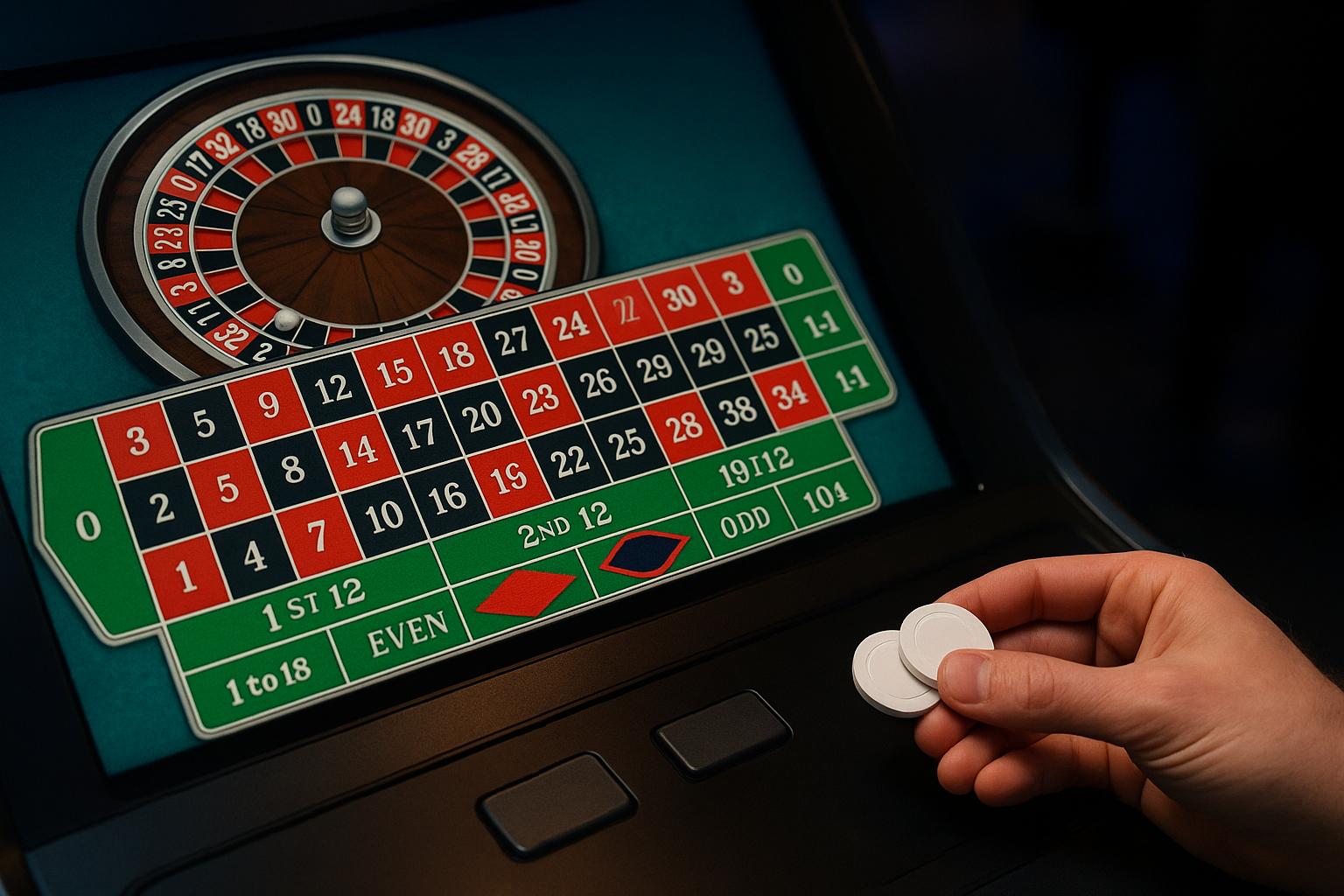

Do Any Roulette Systems Really Work? Truth About Roulette Methods
Ever wondered if there’s a secret system to beat the roulette wheel? You’ll find plenty of claims out there, from neat staking patterns to so-called clever number guides.
Our aim is simple. We give clear, accurate information that follows UKGC rules, without making promises about profit. Your play should always stay within your control.
Curious about which methods people talk about most and whether any hold up in practice? Here’s what to know before you place your next bet.
What Are Roulette Systems?
Roulette systems are staking strategies that tell you how much to bet and when to change your stake. Some also suggest which types of bets to choose. They are essentially betting plans that add structure to your play, setting out how your wager size should move from spin to spin.
Well-known examples include the Martingale, Fibonacci, Labouchère and D’Alembert. Martingale often doubles after a loss, Fibonacci follows the famous sequence, Labouchère uses a written list you add to or cross off, and D’Alembert moves your stake up or down by one unit. Each sets rules for increasing or decreasing your stake after wins or losses. Most are built around even-money bets such as red or black, although the same staking ideas can be applied to other bet types with different levels of risk and volatility.
What these systems do not do is change the game’s mathematics. Each spin is independent, outcomes are produced at random, and the house edge remains the same no matter how you stake. On a single-zero European wheel the house edge is about 2.7 percent, while double-zero American wheels have a higher edge. Previous results do not influence future outcomes, and in regulated online games the randomness is independently checked.
It is also important to recognise the practical limits. Progression systems can see stakes rise quickly, and table limits or your own budget will cap how far any plan can run. These strategies may shape short-term swings but they do not alter the expected return. Set sensible limits, only gamble what you can afford to lose, and never chase losses. We do not present any system as a route to guaranteed wins.
How Do Popular Roulette Methods Claim To Work?
Many methods claim to smooth out losses or build steady gains over time. Here is how the main ones are meant to be used, in theory.
Martingale System
Double your stake after each loss, then return to your original stake after a win. One win is intended to recover all previous losses plus a small profit. In practice, a short losing run can push stakes very high very quickly. For example, starting at £5 and losing eight times in a row would require a £1,280 next bet and would leave £1,275 down to that point.
Fibonacci System
Use the Fibonacci sequence, where each number is the sum of the previous two. Move one step forward in the sequence after a loss and two steps back after a win. Stakes can still rise faster than many budgets allow during losing streaks.
Labouchère System
Write a list of numbers. Stake the sum of the first and last numbers. If you win, cross them off. If you lose, add the lost stake to the end of the list. Sequences can grow long after losses, which increases the risk of hitting table limits or personal limits.
D’Alembert System
Increase your stake by one unit after a loss and decrease by one after a win. This rises more slowly than Martingale but does not prevent long-term variance from impacting your balance.
These methods manage the way you stake. They do not alter the odds of the bets themselves. Table limits and personal budgets are real constraints, which is why recovery-based systems tend to break down over time.
Are There Any Proven Roulette Systems?
No system has been scientifically or mathematically proven to beat roulette or remove the house edge. Each spin is independent, and UK-regulated wheels and certified random number generators ensure outcomes are unpredictable.
All legitimate roulette, whether online or in a venue, is a game of chance as set out by the UK Gambling Commission. Strategies can shape how you stake, but none change the underlying odds. Progressions like Martingale only affect volatility, and table limits and your budget stop them overcoming the house edge. Play for enjoyment, set a budget, and do not chase losses.
What Are The Myths About Beating Roulette?
There are plenty of stories about how to win at roulette that sound convincing but do not reflect how the game works. Let’s clear up the most common ones.
Patterns Guarantee Wins
Some players track results hoping to spot a pattern that reveals what comes next. In reality, every spin is independent and random, and past results have no influence on future outcomes.
‘Hot’ and ‘Cold’ Numbers Matter
You may hear that numbers which have not appeared for a while are due, or that numbers appearing more often will keep doing so. There is no basis for this. Each spin is a separate event with the same probabilities as the last.
Systems Can Remove the House Edge
No staking pattern changes the built-in house advantage. Systems can change how your results feel in the short term, but they do not alter the mathematics of the game.
Can The House Edge Ever Be Overcome?
The house edge in roulette comes from the presence of the zero. On European roulette, this is about 2.7 percent. On American roulette, which has a single zero and a double zero, it is higher, at around 5.26 percent. Payouts are set as if there were only 36 numbers, which is why a straight-up bet pays 35 to 1 even though the true odds on a European wheel are 36 to 1. That gap is what creates the casino’s margin.
No staking system or bet selection can remove that advantage. The odds and payouts are the same on every spin, regardless of how you choose to stake. Progression systems can change volatility and how your balance swings, but they do not change the expected return. Each spin is independent, so past outcomes do not influence the next one.
Some tables use rules such as La Partage or En Prison that reduce the effective house edge on even-money bets to about 1.35 percent, but the edge still remains in place. In UKGC-licensed casinos and online games, wheels are maintained and random number generators are tested, so trying to outsmart the game through patterns or suspected bias is not a realistic strategy.
Short winning runs can occur, but over time the maths favours the house. If you choose to play, consider setting deposit and time limits, take regular breaks, and only stake money you can afford to lose. If gambling is affecting you, support services are available.
What Happens If You Use A Roulette System In UK Casinos?
In the UK, you can use staking systems if you wish, provided you play fairly and follow the rules. Cheating, tampering with equipment or using devices or software to interfere with play is illegal and can lead to a ban or more serious consequences. Stakes must sit within table limits, and operators may restrict or close accounts for prohibited tools or collusion.
Online roulette uses certified random number generators, and physical wheels are regularly checked. A system does not change the house edge, and each spin is independent.
Is There A Safe Way To Play Roulette For Fun?
Yes. Roulette can be enjoyable when you decide your limits before you start and stick to them, treating it purely as entertainment.
Set a budget you are comfortable with, choose stakes that fit that budget, and set a time limit. Use account tools like deposit limits and reality checks to help you keep to your plan.
Avoid chasing losses and be ready to stop if it stops being enjoyable. Take regular breaks, play sober, and only use disposable income. Outcomes are random; no strategy guarantees a return.
Responsible Gambling And Setting Limits
Most UK casinos offer tools to help you stay in control. You can set deposit, loss or time limits, take a short time out, or use self-exclusion if you need a longer break. These options are there to support you at any time.
If gambling ever stops feeling fun, seek help early. Organisations such as BeGambleAware provide free, confidential advice and support. You must be 18 or over to gamble in the UK, and gambling should never be used as a source of income or a way to address financial problems.
Roulette systems cannot beat the house edge, so the best approach is simple. If you choose to play, treat it as entertainment, use the tools available, and keep your play within limits.
**The information provided in this blog is intended for educational purposes and should not be construed as betting advice or a guarantee of success. Always gamble responsibly.